
Dry Eye Syndrome: Symptoms, Causes & When to See a Specialist
Burning, gritty, watery eyes that never feel right? You may have dry eye syndrome. Learn the signs, causes, and advanced treatments available in Las Vegas.

Dry Eye Syndrome: Symptoms, Causes & When to See a Specialist
If your eyes burn, itch, feel gritty, or water constantly — yet never actually feel comfortable — you may be dealing with dry eye syndrome. It's one of the most common and most misunderstood eye conditions, affecting an estimated 16 million Americans. And in a desert climate like Las Vegas, the numbers are even higher.
The good news: dry eye is very treatable. The key is understanding what's actually causing it.
What Is Dry Eye Syndrome?
Dry eye syndrome (also called dry eye disease or DED) occurs when your eyes don't produce enough tears, or when the tears they do produce evaporate too quickly. Your tear film is a complex three-layer structure — oil, water, and mucus — and a breakdown in any layer can cause symptoms.
There are two main types:
- Aqueous deficient dry eye: Your lacrimal glands aren't producing enough of the watery component of tears.
- Evaporative dry eye: Your meibomian glands (tiny oil glands along your eyelid margins) are blocked or dysfunctional, causing tears to evaporate too fast. This is by far the most common type, accounting for up to 86% of dry eye cases.
Common Symptoms of Dry Eye
Dry eye doesn't always feel "dry." Many patients are surprised to learn their symptoms are caused by dry eye:
- Burning or stinging sensation, especially in the afternoon or evening
- Gritty or sandy feeling, like something is in your eye
- Excessive tearing — your eyes overcompensate with reflex tears that don't actually lubricate
- Blurry vision that clears temporarily when you blink
- Redness and irritation, particularly after screen time
- Eye fatigue or difficulty keeping your eyes open
- Sensitivity to light or wind
- Contact lens discomfort — lenses feel dry or uncomfortable within hours of putting them in
If you experience any combination of these symptoms regularly, it's worth getting a proper dry eye evaluation — not just picking up over-the-counter drops.
What Causes Dry Eye?
Dry eye has many contributing factors, and most patients have more than one:
Meibomian Gland Dysfunction (MGD)
The meibomian glands line your upper and lower eyelids and secrete the oil layer of your tear film. When these glands become blocked or atrophied, the oil layer thins and tears evaporate rapidly. MGD is the leading cause of evaporative dry eye and is often associated with blepharitis (eyelid inflammation).
Age and Hormonal Changes
Tear production naturally decreases with age. Women going through perimenopause or menopause are particularly susceptible due to hormonal shifts that affect the lacrimal and meibomian glands.
Screen Time and Digital Eye Strain
When we stare at screens, we blink up to 60% less than normal. Reduced blinking means the tear film isn't refreshed as often, leading to evaporation and dryness. This is a major driver of dry eye in younger patients.
Environment
Las Vegas's dry desert climate, low humidity, and air conditioning are a perfect storm for dry eye. Airplane travel, wind, and smoke exposure compound the problem.
Medications
Many common medications list dry eye as a side effect, including antihistamines, antidepressants, blood pressure medications, and hormonal contraceptives.
Contact Lens Wear
Extended contact lens wear can disrupt the tear film and reduce corneal sensitivity over time, contributing to dry eye.
Autoimmune Conditions
Conditions like Sjögren's syndrome, rheumatoid arthritis, and lupus can directly affect tear production.
Why Over-the-Counter Drops Often Aren't Enough
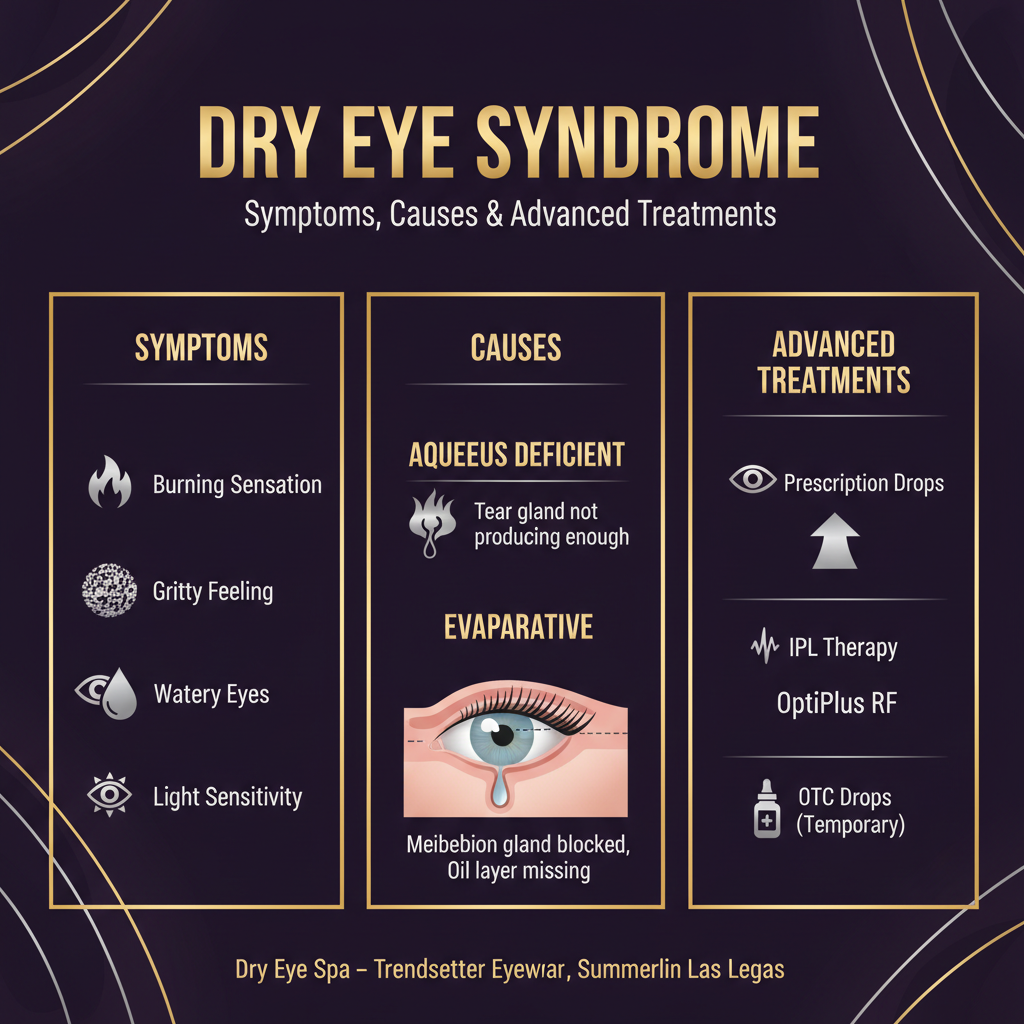
Dry eye has two distinct root causes — and most over-the-counter drops only address the surface symptoms of one of them. Identifying your type is the first step to lasting relief.
Most patients try artificial tears first — and while they can provide temporary relief, they don't address the underlying cause. If your dry eye is driven by MGD, no amount of drops will unclog your meibomian glands. You need targeted treatment.
This is why a proper dry eye evaluation is so important. At Trendsetter Eyewear, we use advanced diagnostic tools to identify exactly what type of dry eye you have and which glands are affected — before recommending any treatment.
Advanced Dry Eye Treatments at Our Dry Eye Spa
Our dedicated Dry Eye Spa offers a full range of evidence-based treatments, many of which aren't available at standard optometry offices:
OptiPlus RF (Radiofrequency)
Radiofrequency energy gently heats the meibomian glands and surrounding tissue, liquefying blocked secretions and stimulating collagen production. Patients often notice improvement after just one session.
Intense Pulsed Light (IPL)
Originally developed for dermatology, IPL has become one of the most effective treatments for evaporative dry eye. Light pulses reduce inflammation, target abnormal blood vessels that contribute to MGD, and improve meibomian gland function.
NuLids
A professional eyelid cleaning treatment that removes biofilm, bacteria, and debris from the eyelid margins — addressing the root cause of blepharitis and Demodex-related dry eye.
Rinsada Eyelid Spa
A gentle, spa-like eyelid cleansing treatment that removes buildup and improves the health of the eyelid margin environment.
CO2Lift Pro Masks
Carboxy therapy masks that deliver CO2 to the periorbital area, improving circulation and reducing inflammation around the eyes.
Microbiome Testing
We can test the bacterial environment of your eyelids to identify Demodex mite infestations or bacterial overgrowth that may be driving your symptoms.
When Should You See a Dry Eye Specialist?
You should schedule a dry eye evaluation if:
- You've been using artificial tears for more than a few weeks without lasting relief
- Your symptoms are affecting your ability to work, drive, or use screens comfortably
- You've been told you have blepharitis or MGD
- You're considering LASIK or other refractive surgery (dry eye must be addressed first)
- Your symptoms are getting progressively worse
Don't wait until your eyes are severely affected. Early intervention leads to better outcomes and can prevent permanent meibomian gland atrophy.
Take the Next Step
If you're in the Summerlin or Las Vegas area and struggling with dry eye symptoms, we'd love to help. Dr. Payne specializes in dry eye and will take the time to understand your full picture — not just hand you a sample of drops.
Schedule a Dry Eye Evaluation and find out what's really going on with your eyes.
Frequently Asked Questions
What are the most common symptoms of dry eye disease?
The most common symptoms are burning, stinging, a gritty or sandy sensation, redness, fluctuating or blurry vision that clears with blinking, and excessive tearing (paradoxically — the eye produces reflex tears in response to irritation). Many patients also notice increased sensitivity to wind, smoke, and air conditioning, and difficulty with prolonged reading or screen use.
What causes dry eye disease — is it just not blinking enough?
Dry eye has two main mechanisms: insufficient tear production (aqueous deficient dry eye) and excessive tear evaporation (evaporative dry eye). Evaporative dry eye — caused by meibomian gland dysfunction (MGD), where the oil-producing glands in the eyelids become blocked — accounts for approximately 85% of cases. Risk factors include age, female sex, contact lens wear, screen use, certain medications, autoimmune conditions, and environmental factors like Las Vegas's desert climate.
Can dry eye be cured, or is it something I'll have forever?
Dry eye is typically a chronic condition that requires ongoing management rather than a one-time cure. However, with appropriate treatment, most patients achieve significant and sustained symptom relief. In-office treatments like IPL and OptiPlus RF can produce lasting improvement in meibomian gland function. The goal is to find the right combination of treatments and maintenance to keep symptoms well-controlled.
What is the difference between over-the-counter eye drops and prescription dry eye treatment?
Over-the-counter artificial tears temporarily supplement the tear film but do not address the underlying cause of dry eye. Prescription treatments like Restasis (cyclosporine) and Xiidra (lifitegrast) reduce the inflammatory component of dry eye disease and improve the eye's own tear production over time. They require consistent use for 3–6 months before full benefit is seen. For patients with meibomian gland dysfunction, in-office treatments that restore gland function are often more effective than drops alone.
How does a doctor diagnose dry eye disease?
A comprehensive dry eye evaluation includes assessment of tear volume (Schirmer test or tear meniscus height), tear quality (tear break-up time), meibomian gland evaluation (meibography to image the glands), and ocular surface staining to detect damage. This evaluation goes well beyond a standard eye exam and is necessary to determine the type and severity of dry eye and guide treatment decisions.
To find out which dry eye treatment is right for you, schedule a dry eye evaluation at Trendsetter Eyewear in Summerlin, Las Vegas — call (702) 479-5222.
Explore Topics
Written by
Dr. Cynthia Payne, OD
Content creator and writer sharing insights and stories.


