
Diabetic Eye Disease: What Every Diabetic Patient Needs to Know
Diabetes is the leading cause of new blindness in working-age adults — but diabetic eye disease is largely preventable with regular monitoring and early treatment. Here is what every diabetic patient needs to know about protecting their vision.

Diabetic Eye Disease: What Every Diabetic Patient Needs to Know
Diabetes affects nearly every organ system in the body — and the eyes are no exception. Diabetic eye disease is the leading cause of new blindness in working-age adults in the United States, affecting approximately one-third of all people with diabetes. Yet the most serious forms of diabetic eye disease are largely preventable with regular monitoring, good blood sugar control, and timely treatment.
If you have diabetes — type 1, type 2, or gestational — understanding the risks to your vision and committing to annual dilated eye exams is one of the most important things you can do for your long-term health.
How Diabetes Affects the Eyes
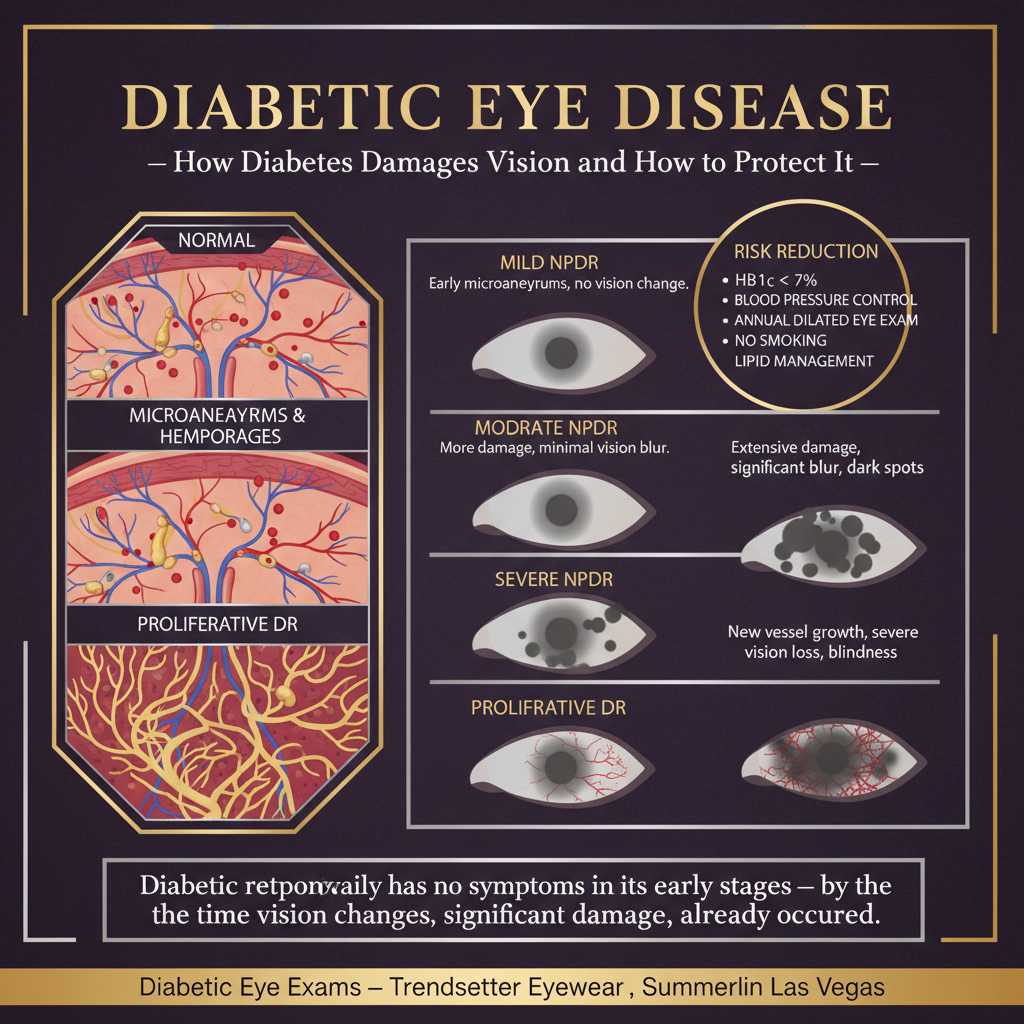
Diabetic retinopathy has no symptoms in its early stages — by the time vision changes, significant damage has already occurred. Annual dilated eye exams are the only way to catch it before it affects your sight.
High blood sugar damages the small blood vessels throughout the body — including the delicate capillaries of the retina. Over time, this damage leads to several distinct eye conditions:
Diabetic Retinopathy
Diabetic retinopathy is the most common and most serious diabetic eye disease. It occurs when damaged retinal blood vessels leak fluid, bleed, or grow abnormally.
Non-proliferative diabetic retinopathy (NPDR) is the early stage, characterized by microaneurysms (tiny bulges in blood vessel walls), dot and blot hemorrhages, and hard exudates (lipid deposits from leaking vessels). Vision may be unaffected at this stage.
Proliferative diabetic retinopathy (PDR) is the advanced stage, in which new, fragile blood vessels grow on the retinal surface (neovascularization). These vessels bleed easily, causing vitreous hemorrhage (bleeding into the eye) and can lead to tractional retinal detachment — a serious, vision-threatening complication.
Diabetic Macular Edema (DME)
Diabetic macular edema is swelling of the macula caused by leaking blood vessels. It is the most common cause of vision loss in diabetic patients and can occur at any stage of retinopathy. DME causes blurred, distorted central vision and can develop rapidly.
Diabetic Cataracts
People with diabetes develop cataracts at a younger age and more rapidly than non-diabetic patients. High blood sugar alters the lens proteins, accelerating the clouding process.
Neovascular Glaucoma
In advanced diabetic eye disease, abnormal blood vessels can grow into the drainage angle of the eye, causing a severe form of glaucoma that is difficult to treat.
The Asymptomatic Danger
The most dangerous aspect of diabetic eye disease is that it causes no symptoms in its early stages. Patients with significant retinopathy — even proliferative retinopathy — may have perfectly normal vision until a vitreous hemorrhage or retinal detachment occurs. By that point, the disease is advanced and treatment is more difficult.
This is why annual dilated eye exams are non-negotiable for diabetic patients — not a recommendation, but a medical necessity.
What a Diabetic Eye Exam Includes
At Trendsetter Eyewear, diabetic eye exams include:
- Dilated fundus examination — Dilation allows a comprehensive view of the peripheral retina
- OCT imaging — Detects diabetic macular edema with micron-level precision, often before it affects vision
- Fundus photography — Documents retinal changes for comparison at future visits
- Intraocular pressure measurement — Screens for diabetic glaucoma
- Visual acuity testing — Assesses current functional vision
We provide a detailed report to your primary care physician or endocrinologist to support coordinated diabetes management.
How Often Should Diabetic Patients Have Eye Exams?
- Type 1 diabetes: Annual dilated eye exam beginning 5 years after diagnosis
- Type 2 diabetes: Annual dilated eye exam beginning at diagnosis (retinopathy may already be present)
- Pregnancy with diabetes: Eye exam in the first trimester and close monitoring throughout pregnancy
- Known retinopathy: More frequent monitoring (every 3–6 months) depending on severity
Protecting Your Vision: What You Can Control
The most powerful thing you can do to protect your vision with diabetes is to control your blood sugar. The landmark DCCT and UKPDS trials demonstrated that tight blood sugar control reduces the risk of developing retinopathy by 76% and slows progression in patients who already have it.
Additional protective measures:
- Control blood pressure (hypertension accelerates retinopathy)
- Control cholesterol (lipid deposits worsen macular edema)
- Do not smoke
- Exercise regularly
- Attend all scheduled eye exams — even when your vision feels fine
Treatment Options
When diabetic eye disease requires treatment, options include:
- Anti-VEGF injections — The gold standard for diabetic macular edema and proliferative retinopathy; dramatically reduce vision loss risk
- Laser photocoagulation — Seals leaking blood vessels and reduces the stimulus for abnormal vessel growth
- Vitrectomy — Surgical removal of vitreous hemorrhage or repair of tractional retinal detachment
All of these treatments are most effective when the disease is detected early — another reason why regular monitoring is so important.
Call (702) 479-5222 or schedule your diabetic eye exam at Trendsetter Eyewear in Summerlin, Las Vegas. We coordinate with your diabetes care team to provide comprehensive, integrated eye care.
Explore Topics
Written by
Dr. Cynthia Payne, OD
Content creator and writer sharing insights and stories.


