
Eye Allergies in Las Vegas: Why the Desert Is Not as Safe as You Think
Many people move to Las Vegas expecting relief from allergies — and are surprised to find their eye symptoms get worse. Here is why Las Vegas has significant allergen exposure and how to manage allergic eye disease effectively.

Eye Allergies in Las Vegas: Why the Desert Is Not as Safe as You Think
A common misconception about Las Vegas is that its desert climate means low allergen exposure. Many people with allergies move to the Mojave Desert expecting relief — and are surprised to find that their eye symptoms persist or even worsen. Understanding the specific allergens present in the Las Vegas valley is the first step toward effective management.
Las Vegas Allergens: What Is Actually in the Air
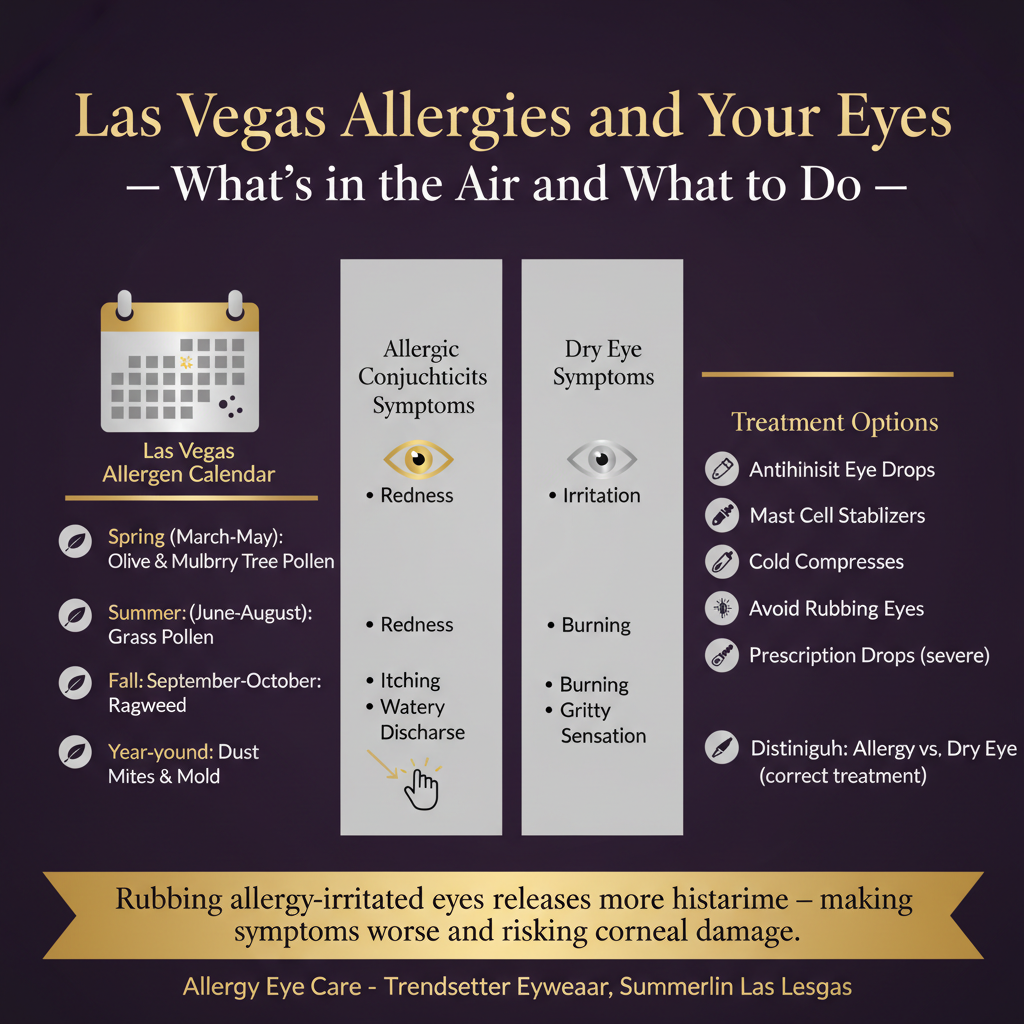
Rubbing allergy-irritated eyes releases more histamine — making symptoms worse and risking corneal damage. The most important distinction is whether you have allergic conjunctivitis, dry eye, or both, since the treatments differ and using the wrong one can worsen the other condition.
Grasses
Bermuda grass is ubiquitous in Las Vegas landscaping and golf courses, and it is one of the most potent grass allergens in the region. Bermuda grass pollen season runs from spring through fall — a much longer season than in cooler climates. Johnson grass and other warm-season grasses also contribute.
Trees
Olive trees were widely planted throughout Las Vegas for decades before the city recognized their allergenic impact. Olive pollen is one of the most significant allergens in the Las Vegas valley, with a peak season in spring (March–May). Mulberry trees — another common landscape tree — are also highly allergenic.
Weeds
Russian thistle (tumbleweed) is iconic in the Mojave Desert and a significant allergen in late summer and fall. Ragweed, while less prevalent than in the Midwest, is present in the Las Vegas valley. Various other desert weeds contribute to the fall allergy season.
Dust and Particulates
The desert environment generates significant dust exposure, particularly during windstorms. Dust contains not just soil particles but mold spores, pollen, and other biological material that can trigger allergic responses.
Mold
Despite the dry climate, mold can be a significant allergen in Las Vegas — particularly in irrigated areas, around pools, and in air conditioning systems that are not properly maintained.
Symptoms of Allergic Eye Disease
Allergic conjunctivitis — inflammation of the conjunctiva (the clear membrane covering the white of the eye) caused by allergen exposure — produces characteristic symptoms:
- Intense itching — The hallmark symptom; itching that is worse with eye rubbing
- Redness — Diffuse redness of the conjunctiva
- Watering — Clear, watery discharge
- Swelling — Puffy, swollen eyelids (particularly in the morning)
- Burning and stinging — Often accompanying the itching
- Sensitivity to light
- Stringy mucus discharge — Particularly in vernal (seasonal) conjunctivitis
Allergic Conjunctivitis vs. Dry Eye: An Important Distinction
Allergic conjunctivitis and dry eye share several symptoms — redness, burning, and watering — and they frequently coexist. The key distinguishing feature is itching: intense itching is characteristic of allergic disease and is not a primary symptom of dry eye.
However, the two conditions can exacerbate each other. Allergic inflammation disrupts the tear film and ocular surface, worsening dry eye. Dry eye makes the ocular surface more sensitive to allergens. Treating both conditions simultaneously is often necessary for complete symptom relief.
Treatment Options
Antihistamine/Mast Cell Stabilizer Eye Drops
The first-line treatment for allergic conjunctivitis. Combination antihistamine/mast cell stabilizer drops (olopatadine, ketotifen, bepotastine) are highly effective and available both by prescription and over the counter. They work best when used consistently during allergy season rather than only when symptoms are severe.
Oral Antihistamines
Oral antihistamines (cetirizine, loratadine, fexofenadine) reduce systemic allergic response and can help with eye symptoms. However, many oral antihistamines have a drying effect that can worsen dry eye — a significant consideration in Las Vegas.
Artificial Tears
Preservative-free artificial tears help dilute and wash allergens from the ocular surface. Using drops after outdoor exposure can reduce allergen contact time.
Cold Compresses
Cold compresses reduce histamine release and provide symptomatic relief from itching and swelling. Apply for 10–15 minutes as needed.
Prescription Treatments
For severe or persistent allergic conjunctivitis, prescription options include:
- Topical corticosteroids — For short-term use during severe flares
- Topical cyclosporine — For chronic allergic inflammation
- Immunotherapy (allergy shots) — For patients with significant systemic allergies; can reduce ocular sensitivity over time
Environmental Modifications
- Keep windows closed during high pollen days
- Change HVAC filters regularly
- Shower after outdoor exposure to remove pollen from hair and skin
- Wear wraparound sunglasses outdoors to reduce direct pollen contact with the eyes
- Check daily pollen counts (Las Vegas has several monitoring stations)
When to See an Eye Doctor
Most seasonal allergic conjunctivitis can be managed with over-the-counter drops. However, see an eye doctor if:
- Symptoms are severe or not responding to OTC treatment
- You have significant pain, light sensitivity, or vision changes (these suggest a more serious condition)
- You wear contact lenses (allergic conjunctivitis significantly affects contact lens comfort and requires specific management)
- Symptoms are present year-round (may indicate perennial allergic conjunctivitis or a non-allergic cause)
Call (702) 479-5222 or schedule an appointment at Trendsetter Eyewear in Summerlin, Las Vegas. We can help you identify your triggers and develop an effective management plan for comfortable eyes year-round.
Related reading:
- Dry Eye Spa treatments in Las Vegas — allergic inflammation often worsens dry eye; we treat both
- Comprehensive eye exams in Summerlin — includes ocular surface evaluation and allergy assessment
- Dry eye and screen time — how digital devices compound allergy-related eye irritation
Explore Topics
Written by
Dr. Cynthia Payne, OD
Content creator and writer sharing insights and stories.


